Single-gene findings
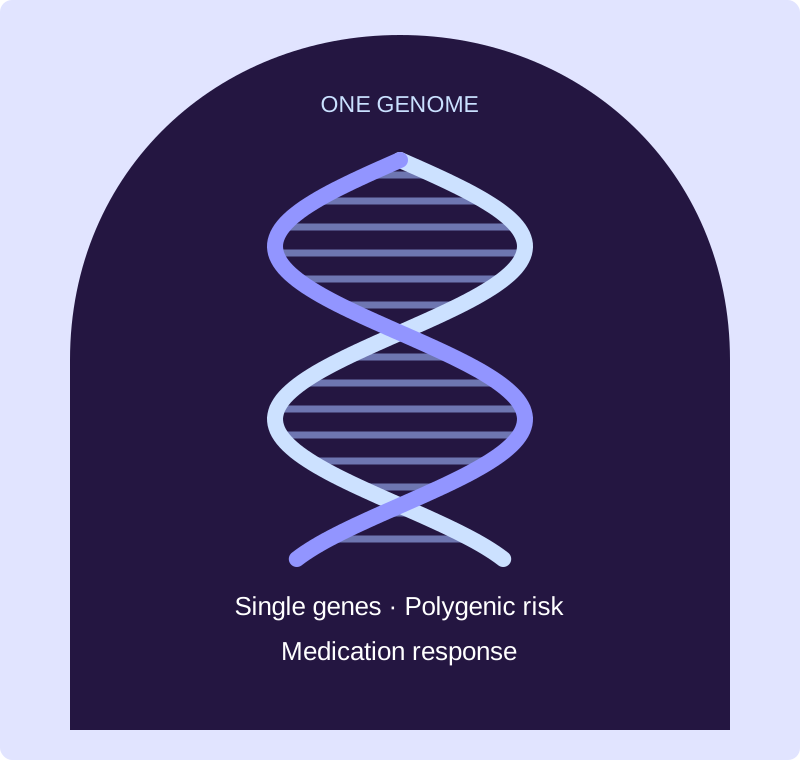
Some rare variants have a large effect on risk, such as certain hereditary cancer or cardiovascular conditions. This is often called monogenic risk.
 LONGEVITYPlan your visit
 SIMONMED LONGEVITY · HEALTHCHECK 2.4
Your inherited risk.
A broader perspective.
Whole-genome sequencing brings single-gene findings, polygenic risk scores and medication-response insights into one assessment, interpreted alongside your health and family history.
THE SCOPE
Simplify also lists 27 pharmacogenomic genes with information relevant to 224 medications. These describe the provider’s current analysis scope, not a guarantee that every person receives an actionable finding. The report version and offered categories determine what is returned.[1]
Some rare variants have a large effect on risk, such as certain hereditary cancer or cardiovascular conditions. This is often called monogenic risk.
Many common conditions reflect small contributions from many genetic variants. A PRS combines those contributions into an estimate of inherited susceptibility.
Pharmacogenomics can help a prescribing clinician assess how certain medications may be processed or tolerated. It does not automatically select the right drug or dose.
POLYGENIC RISK, EXPLAINED
Think of a PRS as a combined signal from many places in the genome. A person can have no high-impact single-gene finding and still have elevated inherited risk for a common disease. That additional layer can help a clinician decide when to start a screening conversation or look more closely at modifiable risks.[3]
A percentile describes where a score falls compared with a reference population. The 90th percentile does not mean a 90% chance of disease. Absolute risk also depends on age, ancestry, health history and environment; performance can vary across populations.[3]
Genomics looks at inherited susceptibility. Imaging looks for structural findings. Labs and clinical measures add current health information. Used together, they answer different questions.
A 2025 EXAMPLE
In the BARCODE1 study, men aged 55–69 in the highest tenth of a prostate cancer PRS were offered MRI and biopsy. Among 468 who underwent screening, 103 had intermediate- or high-risk cancer; the researchers estimated that 73 of those 103 would have been missed by the usual UK diagnostic pathway.[4]
This was a selected high-risk group, not an average-risk population or a trial of Simplify. It illustrates the potential value of genetic risk selection; it does not predict your personal result or establish a mortality benefit.
WHAT CAN BE ASSESSED
Hereditary cancer genes such as BRCA1/2 and Lynch syndrome genes; PRS examples include breast, prostate, colorectal, pancreatic and other cancers.
Selected inherited neurologic conditions, plus polygenic models for Alzheimer’s disease, Parkinson’s disease and multiple sclerosis. Elevated risk is not a diagnosis.
Inherited lipid disorders, cardiomyopathy and other selected conditions; PRS for coronary artery disease, atrial fibrillation, venous thrombosis and lipid traits.
Genetic differences relevant to medication metabolism and response. Discuss findings with the prescriber before changing any medication.
Polygenic models include type 2 diabetes, gout, celiac disease, inflammatory bowel disease and rheumatoid arthritis.
Examples include age-related macular degeneration, endometriosis, uterine fibroids and selected carrier-status findings. Report scope and consent choices matter.
Examples are drawn from Simplify’s current findings summary and gene list; they are not a list of diagnoses that sequencing can rule out. Ask which report version and categories are included in your order.[1][5]
WHY WHOLE GENOME?
Whole-genome sequencing reads across most of the genome, rather than limiting data collection to a small gene panel. Simplify analyzes selected medically relevant findings from that broader data set and can offer reanalysis as interpretation evolves.[2]
Whole-genome sequencing is not required for every PRS. Some scores use genotyping arrays or targeted variants; BARCODE1 used a 130-variant score. The advantage here is broad sequencing data supporting several types of analysis in one platform.[4]
A clinician or genetics professional can connect findings to your actual risk, established screening recommendations and family implications. Not every result requires a new test.
YOUR EXAM
A clinician confirms suitability and discusses scope, consent, family implications and the sample collection process.
Simplify performs whole-genome sequencing and the ordered clinical analysis through its CLIA-certified, CAP-accredited laboratory. Results take longer than the base visit.
Review the report with a qualified clinician or genetics professional. Confirmatory testing, referrals or family testing may be appropriate; these are not assumed to be included.
GOOD TO KNOW
No. Genetic risk is only one part of health. A low score or negative finding does not eliminate disease risk or replace routine screening.
Do not assume this. Simplify says reanalysis can be ordered; included counseling, future reanalysis, turnaround and any additional fees must be confirmed with the concierge.
Clinical and laboratory eligibility apply. Simplify’s current FAQ states that reports are not approved in New York State; confirm the latest state availability before ordering.
Discuss which categories you want reported, data access and storage, family implications and privacy with the ordering clinician. Ask about any consent choices before a sample is collected.
GO FURTHER, THOUGHTFULLY
CONCIERGE SIMONMED LONGEVITY SCHEDULING
xxx xxx xxxx
Locations nationwide · Exam availability varies by location.
Bundled with your $399 HealthCheck 2.0. Add-ons require clinical suitability and may need more time or a separate appointment.
Plan your visit ↗THE EVIDENCE BEHIND THE EXPLANATION
Sources reviewed September 19, 2026. Study populations and limitations are described above. Educational information complements individualized medical care.
SIMONMED LONGEVITY
Advanced Testing. Results. Plan.
Start with HealthCheck 2.0