

SIMONMED LONGEVITY · HEALTHCHECK 2.8

AI-enhanced Lung CT

Find small findings.
Make informed decisions.

Low-dose lung CT can find lung cancer earlier in people at increased risk. SimonMed adds InferVision tools for nodule assessment and Optellum risk analysis when appropriate nodules are identified.

Low-dose CTInferVision nodule toolsOptellum risk assessment
Patient and SimonMed clinician at a CT scanner
BUNDLED ADD-ON RATE$149with your $399 HealthCheck 2.0
View or edit my plan →

A MAJOR ADVANCE IN EARLY DETECTION

Screening that can
save lives.

20%Relative reduction in lung cancer deaths with low-dose CT versus chest X-ray in the National Lung Screening Trial

Low-dose CT screening is one of the major evidence-based advances in reducing lung cancer deaths among appropriately selected high-risk people. The NLST result came from a structured screening program in heavy current or former smokers; it is a relative reduction, not a 20-percentage-point improvement for every person.[1]

This survival evidence belongs to the screening program, not to the AI tools added later. An isolated scan is only part of the process: appropriate eligibility, repeat screening when recommended and reliable follow-up all matter.

TWO COMPLEMENTARY AI ROLES

Detect and measure.
Then assess risk.

INFERVISION

A closer look at nodules

InferRead CT Lung supports the radiologist with nodule detection and measurements, including size and other features available in the cleared software configuration. Comparing prior scans helps assess change over time.[3]
OPTELLUM

More context for a finding

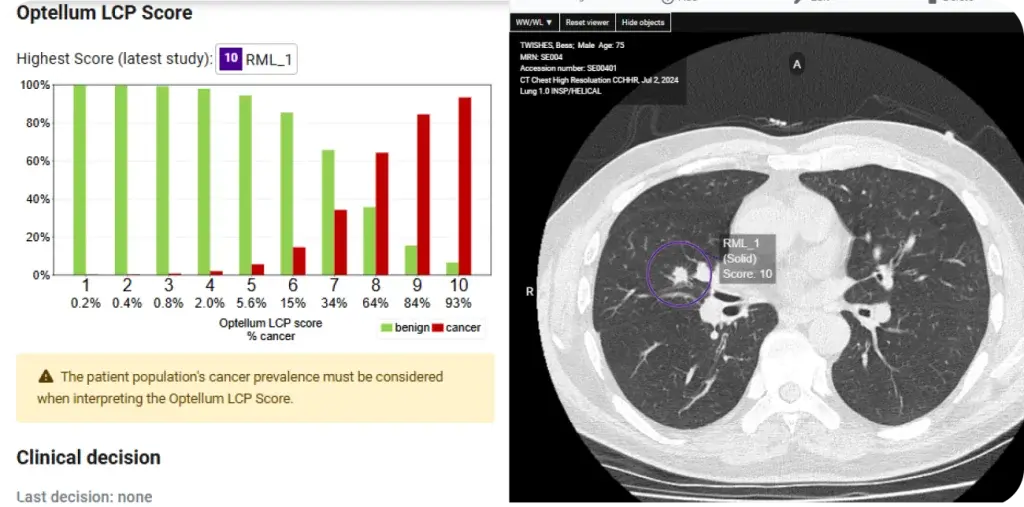
Optellum’s Lung Cancer Prediction tool analyzes eligible, already identified nodules to estimate malignancy risk. It helps inform the next-step discussion alongside the images and clinical information.[4]

A nodule is not the same as cancer. Better risk assessment aims to help distinguish nodules that can be followed from those that warrant more investigation, potentially reducing unnecessary procedures. It cannot eliminate false positives or guarantee that a cancer will be found.[5]

OPTELLUM IN VIEW

An AI-marked nodule.
A clinician-led decision.

Optellum manufacturer demonstration showing CT views, a marked pulmonary nodule and AI risk analysis
Manufacturer demonstration from Optellum. Not a SimonMed patient result. The displayed score is an example, not an expected result or a diagnosis. View the source.

The software focuses analysis on a selected nodule. The clinician considers that output with nodule size, appearance, growth, smoking history and other information. Depending on the finding, the next step may be a scheduled follow-up CT, specialist consultation or further diagnostic testing.[4]

WHO BENEFITS MOST?

Choose screening
based on risk.

One widely used U.S. recommendation—the USPSTF guideline—supports annual low-dose CT for adults aged 50–80 with at least a 20 pack-year smoking history who currently smoke or quit within the past 15 years. Other professional guidelines differ, so review your eligibility with a clinician.[2]

A pack-year is one pack per day for one year; for example, one pack daily for 20 years equals 20 pack-years. Evidence for routine screening in average-risk never-smokers is less established. Screening complements smoking cessation and does not replace evaluation of symptoms.

CT uses ionizing radiation. Screening can identify benign nodules, miss cancers and lead to follow-up scans or procedures. The benefit is greatest when testing is part of an appropriate care pathway.[2]

YOUR EXAM

Advanced Testing.
Results. Plan.

01

Assess eligibility

Share age, smoking exposure, prior lung imaging and symptoms. The team confirms the low-dose screening protocol and whether it is appropriate.

02

Scan

A brief CT acquisition with breath-hold instructions creates detailed lung images. Screening low-dose lung CT generally does not use IV contrast.

03

Review & follow up

Expert radiologist review, supported by the relevant AI tools, guides the report. Nodule findings may need repeat imaging or specialist evaluation.

GOOD TO KNOW

Your questions,
answered.

Will every scan receive Optellum analysis?

Optellum is used for appropriate identified nodules within the software’s intended scope. A scan without an eligible nodule does not need a nodule malignancy score.

Does AI replace the radiologist?

No. InferVision and Optellum support different parts of assessment. Expert interpretation and a clear follow-up plan remain essential.

Does a nodule mean I have cancer?

No. Many lung nodules are benign. The purpose of risk assessment is to help choose an appropriate next step rather than assume every finding needs an invasive procedure.

Is one scan enough?

For people who meet screening criteria, guidelines typically recommend an ongoing annual program while eligible. Specific findings can require a different follow-up interval.

CONCIERGE SIMONMED LONGEVITY SCHEDULING

Make it part
of your conversation.

xxx xxx xxxx

Locations nationwide · Exam availability varies by location.

HealthCheck 2.8 · $149

Bundled with your $399 HealthCheck 2.0. Add-ons require clinical suitability and may need more time or a separate appointment.

Plan your visit ↗

SIMONMED LONGEVITY

Preserve your
healthspan.

Advanced Testing. Results. Plan.

Start with HealthCheck 2.0