The artery channel
Assess whether and where visible plaque narrows a coronary artery.
 LONGEVITYPlan your visit
 SIMONMED LONGEVITY · HEALTHCHECK 2.7
See the arteries.
Understand the plaque.
Coronary CT angiography creates detailed images of the heart’s arteries. AI-assisted plaque analysis adds measurements of plaque burden and composition, with expert clinical interpretation.

BEYOND A CALCIUM SCORE
CCTA uses CT imaging with IV iodinated contrast to show the coronary arteries and their lumen—the channel where blood flows. It can assess narrowing and visualize plaque that a calcium-only scan cannot fully characterize.[1]
Assess whether and where visible plaque narrows a coronary artery.
Measure plaque along the arteries, including calcified and non-calcified components.
Connect the imaging findings with your symptoms, cholesterol, blood pressure, family history and existing care plan.
WHY COMPOSITION MATTERS
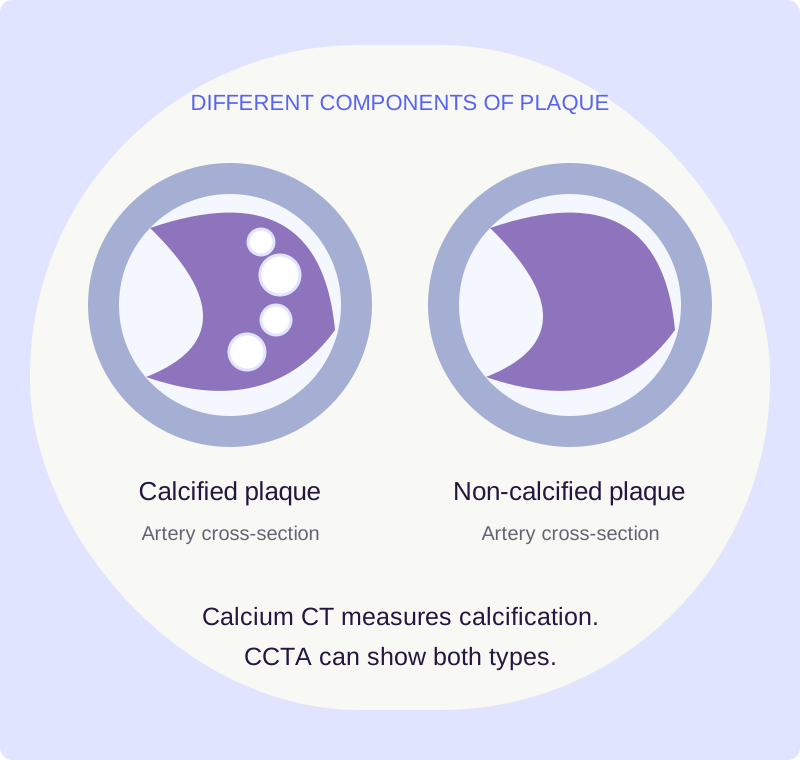
Lipid-rich, non-calcified plaque can rupture and cause a clot that leads to a heart attack. A lesion does not always have to cause severe narrowing beforehand. However, many plaques remain stable; appearance alone cannot predict exactly which one will cause an event.
In SCOT-HEART, a greater burden of low-attenuation non-calcified plaque on CCTA was associated with future myocardial infarction. This supports looking at plaque characteristics alongside stenosis and traditional risk factors.[2]
WHAT AI CONTRIBUTES
AI-assisted software helps quantify and organize plaque findings so they can be reviewed consistently. The radiologist and clinical team remain responsible for interpreting the exam in context; AI does not independently diagnose your future risk or choose your treatment.[1]
Support measurement of plaque and arterial narrowing across the coronary tree.
Help distinguish calcified and non-calcified components, with analysis dependent on the platform and image quality.
Use the report to inform a clinician-led prevention or diagnostic plan. Additional testing or specialist review may be appropriate.
THE SCIENCE IN CONTEXT
The 2026 REACT study found atherosclerosis in at least one studied territory in 57.1% of 16,808 adults without known cardiovascular disease. It examined coronary, carotid and femoral arteries; the result is not a coronary-only prevalence estimate.[3]
REACT shows why disease can be present before symptoms. It does not establish that universal CCTA screening improves outcomes. Your clinician should decide whether a CCTA result is likely to change a meaningful care decision.
YOUR EXAM
Confirm suitability, kidney function when indicated, contrast allergy history and relevant medications. Follow the center’s food, caffeine and preparation instructions.
An IV is used for iodinated contrast. The team may give medications to optimize heart rate and vessel visibility when appropriate. Follow breath-hold instructions.
Receive expert interpretation with the ordered AI plaque analysis. Discuss findings and follow-up with your clinician; additional care may be needed.
GOOD TO KNOW
Yes. It uses ionizing radiation and IV iodinated contrast. Your team weighs the expected benefit against individual considerations, including pregnancy, kidney function and prior contrast reactions.
No. CCTA is a noninvasive CT examination using an IV. Catheter angiography is a different procedure and may still be needed in selected cases.
The listed bundle includes CCTA with AI plaque analysis. CT-derived fractional flow reserve and other additional analyses are not assumed to be included; confirm any extra services and fees.
Ask the team whether the planned protocol includes calcium assessment. Selecting both separately may not be necessary.
GO FURTHER, THOUGHTFULLY
CONCIERGE SIMONMED LONGEVITY SCHEDULING
xxx xxx xxxx
Locations nationwide · Exam availability varies by location.
Bundled with your $399 HealthCheck 2.0. Add-ons require clinical suitability and may need more time or a separate appointment.
Plan your visit ↗THE EVIDENCE BEHIND THE EXPLANATION
Sources reviewed September 19, 2026. Study populations and limitations are described above. Educational information complements individualized medical care.
SIMONMED LONGEVITY
Advanced Testing. Results. Plan.
Start with HealthCheck 2.0