What it shows
Evidence and amount of calcified coronary plaque. Higher scores generally indicate a greater burden of atherosclerosis.
 LONGEVITYPlan your visit
 SIMONMED LONGEVITY · HEALTHCHECK 2.6
A useful score.
Part of the picture.
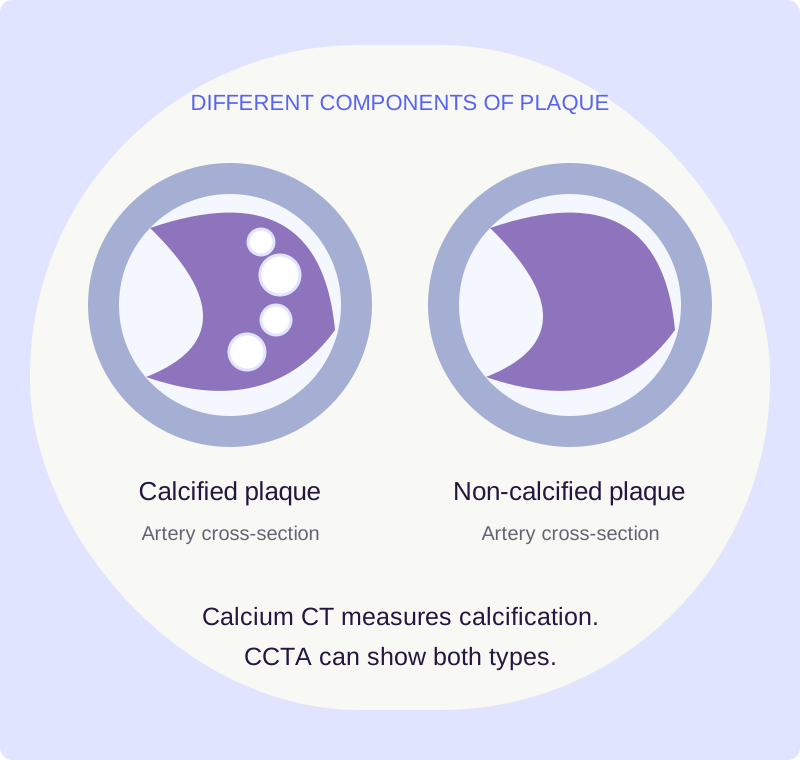
A quick, non-contrast CT measures calcified plaque in the heart’s arteries. It can refine a prevention conversation, but it does not show all coronary plaque.
WHAT THE SCORE MEANS
A coronary artery calcium scan, often called CAC, measures calcium in coronary artery plaque. The result is usually reported as an Agatston score and interpreted with age and other risk factors. In selected people, it can help clarify prevention decisions when estimated risk alone leaves uncertainty.[1]
Evidence and amount of calcified coronary plaque. Higher scores generally indicate a greater burden of atherosclerosis.
The full amount of non-calcified plaque, detailed arterial narrowing or whether a particular plaque will cause a future event.
A relatively simple test without an IV contrast injection, used to inform a broader conversation about cardiovascular prevention.
THE LIMIT OF ZERO
Plaque can develop before it calcifies. Non-calcified plaque is particularly relevant earlier in the disease process, including in younger adults. A calcium-only test can therefore look reassuring while coronary atherosclerosis is still present.
In a SCOT-HEART analysis of patients with suspected angina, 14% of those with a calcium score of zero had non-obstructive disease on coronary CT angiography and 2% had obstructive disease. These were symptomatic patients; the percentages should not be applied to all healthy adults.[2]
“Soft” commonly refers to non-calcified plaque. Lipid-rich plaque can rupture and trigger a clot, but not all non-calcified plaque is unstable or destined to cause a heart attack.
REACT · 2026
The REACT study used coronary CT angiography and carotid/femoral ultrasound to examine silent atherosclerosis across adult life. Plaque was present even in some young adults, with prevalence rising substantially with age.[3]
The 57.1% figure includes coronary, carotid or femoral plaque; it is not the percentage with coronary disease alone. This was an observational study of disease prevalence, not proof that scanning every asymptomatic adult prevents heart attacks.[3]
CHOOSING A HEART EXAM
HEALTHCHECK 2.6 · $75
Measures calcified plaque. No IV contrast. A focused risk-refinement tool for selected people.
HEALTHCHECK 2.7 · $749
Evaluates the artery lumen and both calcified and non-calcified plaque. Requires IV iodinated contrast and additional preparation.
Explore CCTA ↗Both use ionizing radiation. The choice depends on symptoms, risk, prior testing and the clinical decision to be made. A zero calcium score should not dismiss new symptoms or override an appropriate evaluation.
YOUR EXAM
Discuss whether CAC will help a specific prevention decision. Tell the team about pregnancy or possible pregnancy.
Lie on the CT table and follow a brief breath-hold instruction. The calcium scan does not require IV contrast.
Review the score with your clinician in the context of blood pressure, lipids, diabetes, smoking and family history.
GOOD TO KNOW
It is generally reassuring for near-term coronary risk in an appropriate screening setting, but it is not a guarantee and does not rule out non-calcified plaque.
No. It measures calcified plaque burden. It does not directly show the percentage narrowing in an artery.
Not automatically. Your team can explain whether a planned CCTA protocol already includes calcium assessment and whether separate testing would add value.
GO FURTHER, THOUGHTFULLY
CONCIERGE SIMONMED LONGEVITY SCHEDULING
xxx xxx xxxx
Locations nationwide · Exam availability varies by location.
Bundled with your $399 HealthCheck 2.0. Add-ons require clinical suitability and may need more time or a separate appointment.
Plan your visit ↗THE EVIDENCE BEHIND THE EXPLANATION
Sources reviewed September 19, 2026. Study populations and limitations are described above. Educational information complements individualized medical care.
SIMONMED LONGEVITY
Advanced Testing. Results. Plan.
Start with HealthCheck 2.0