Neck arteries
Evaluate visible narrowing and other changes in the carotid and related neck arteries covered by the protocol.
 LONGEVITYPlan your visit
 SIMONMED LONGEVITY · HEALTHCHECK 2.3
Follow the vessels.
Understand the view.
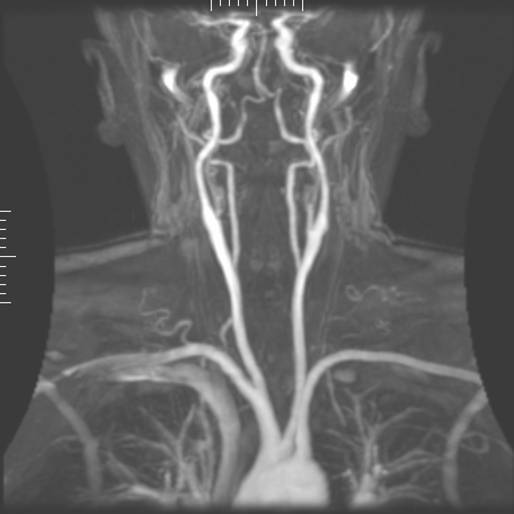
Magnetic resonance angiography, or MRA, looks at the arteries in the neck and brain. It adds a focused vascular assessment to the rapid brain MRI in your base HealthCheck.
WHAT IS MRA?
MRA uses MRI technology to create pictures of arteries. Carotid imaging examines major vessels that carry blood through the neck to the brain; intracranial MRA examines arteries inside the skull.[1]
Evaluate visible narrowing and other changes in the carotid and related neck arteries covered by the protocol.
Look for aneurysms, narrowing and certain other vascular abnormalities in the arteries within the head.
Interpret the images alongside symptoms, family history, blood pressure, cholesterol and other risk information.
TWO CONNECTED VIEWS
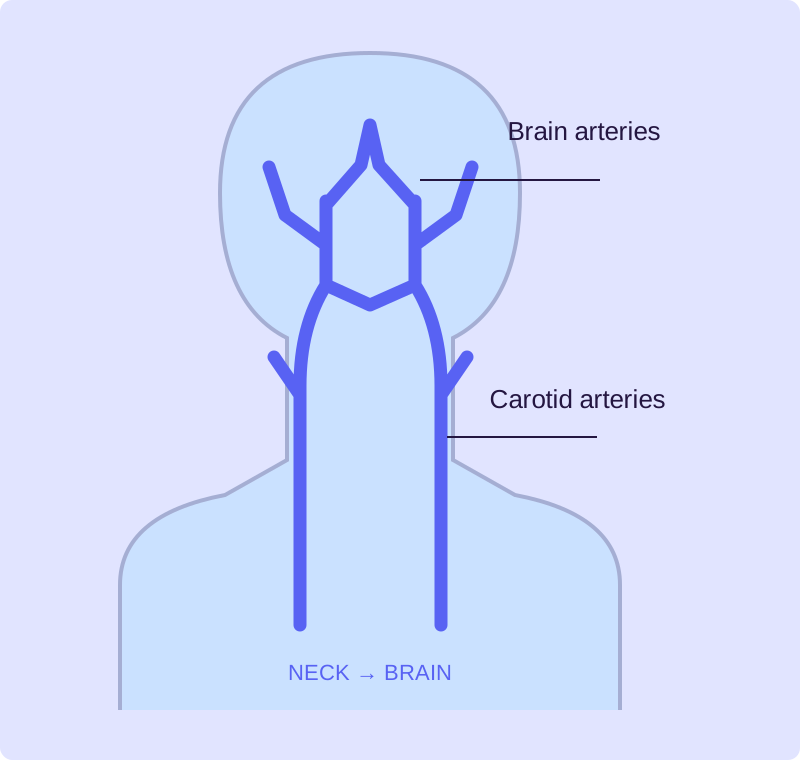
MRA can show the course and shape of blood vessels, areas of narrowing and some aneurysms. Findings may lead to specialist review, surveillance or a different imaging test.
MRA does not measure every type of plaque, identify every small abnormality or predict every stroke. It is different from a coronary CT angiogram and does not assess the heart’s coronary arteries.[1]
CHOOSING THE RIGHT TEST
Vascular imaging is most useful when there is a clear question. A clinician may consider it for selected symptoms, known vascular disease or certain family histories. Routine screening for carotid narrowing in all adults without symptoms is not recommended by the U.S. Preventive Services Task Force.[2]
Brain MRA can often be performed without contrast. The exact head-and-neck protocol, and whether contrast is needed, should be confirmed before your exam. A finding does not automatically mean an intervention will help.[1]
YOUR EXAM
Discuss the clinical question, prior vascular imaging, implants, metal and any contrast considerations with your team.
Lie still in the MRI scanner while focused head and neck vascular images are acquired.
An expert radiologist reviews the images. Your usual clinician helps connect any findings to follow-up and prevention decisions.
GOOD TO KNOW
No. The base HealthCheck includes rapid brain MRI; this add-on specifically evaluates the carotid and intracranial arteries with MRA.
No. Stroke can have several causes, including conditions MRA does not identify. Continue management of blood pressure, cholesterol, smoking and other risk factors with your clinician.
MRA uses magnetic fields and radio waves, not ionizing radiation. MRI safety screening is still required.
GO FURTHER, THOUGHTFULLY
CONCIERGE SIMONMED LONGEVITY SCHEDULING
xxx xxx xxxx
Locations nationwide · Exam availability varies by location.
Bundled with your $399 HealthCheck 2.0. Add-ons require clinical suitability and may need more time or a separate appointment.
Plan your visit ↗THE EVIDENCE BEHIND THE EXPLANATION
Sources reviewed September 19, 2026. Study populations and limitations are described above. Educational information complements individualized medical care.
SIMONMED LONGEVITY
Advanced Testing. Results. Plan.
Start with HealthCheck 2.0